A Question Worth Asking Before You Unroll That Mat
You have probably seen it everywhere — in gyms, hospital waiting rooms, church halls, and even school programmes. Yoga is marketed as a simple path to flexibility, calm, and stress relief. Many Catholics practise it with the best intentions, telling themselves, “I am only doing the stretches — I am not worshipping anyone.” But what if the question of intention is not actually the point? What if the spiritual reality of yoga operates independently of what we think we are doing?
This is a conversation the Catholic Church invites us to take seriously — not to be alarmist, but because our souls genuinely matter. Let us walk through it together, with charity and clarity.
Understanding the Sacredness of Your Soul
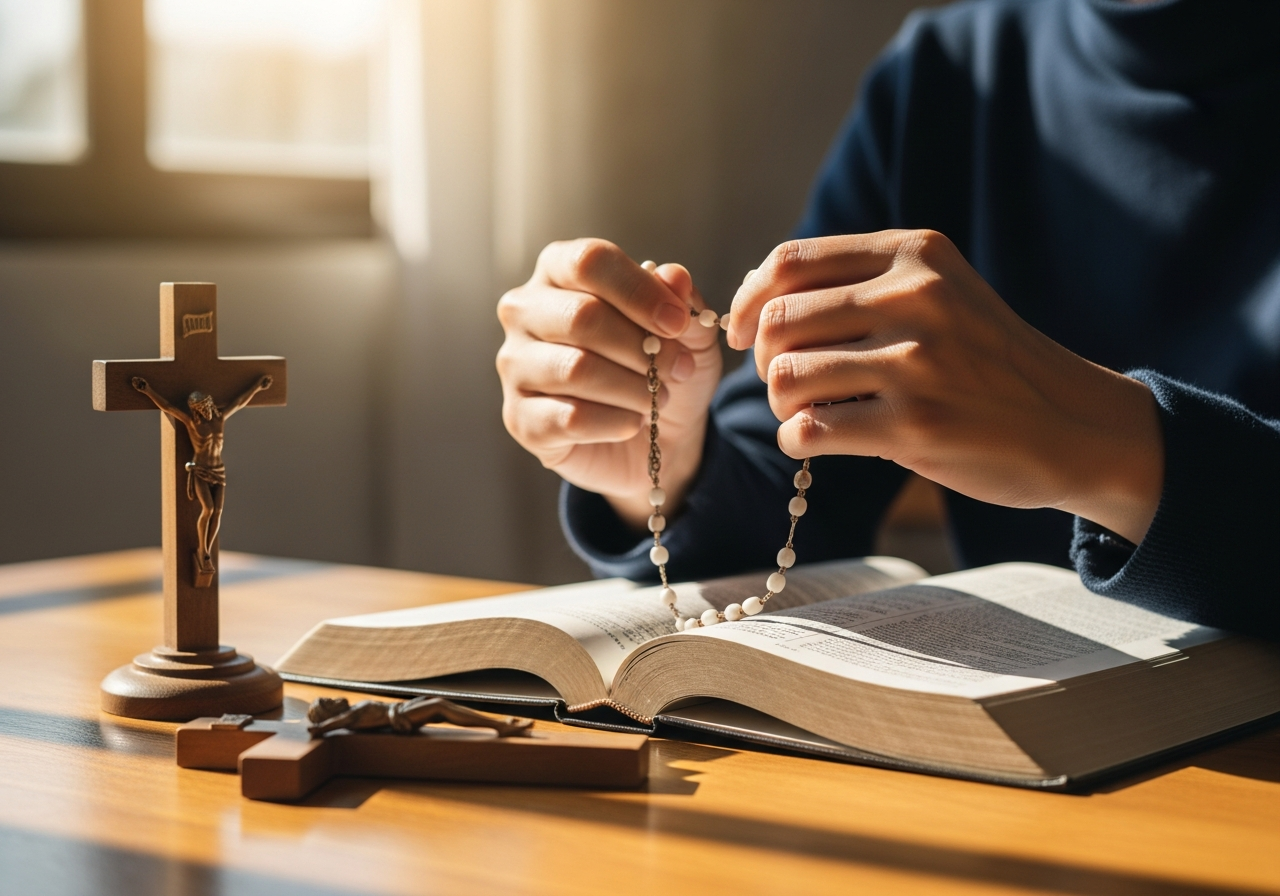
To grasp why yoga is spiritually problematic for Catholics, we first need to appreciate what we are protecting. At the moment of your conception, God breathed into you a unique, immortal soul. The Catechism of the Catholic Church teaches that the soul “does not perish when it separates from the body at death” (CCC 366) and that it is the innermost seat of your identity and your relationship with God.
Scripture puts it beautifully: “Do you not know that your body is a temple of the Holy Spirit within you, which you have from God?” (1 Corinthians 6:19). You are not merely a physical being doing physical things. Every practice you adopt, every posture you assume, every philosophy you permit into your inner life — these touch the sacred space where God Himself desires to dwell.
When you are in a state of grace, the Holy Trinity lives within you. That is an astonishing truth. And it is precisely because that truth is so astonishing that we must be careful about what else we invite in.
What Yoga Actually Is — Beyond the Stretches
Yoga is an ancient Hindu spiritual system. The word itself comes from the Sanskrit root meaning “to yoke” or “to unite” — specifically, to unite the self with the divine as understood within Hinduism. The physical postures, breathing exercises, and meditative states are not merely fitness techniques that happen to have Indian names. They are deliberate pathways designed to open the practitioner to a particular spiritual reality.
Each pose (or asana) has traditionally been associated with Hindu deities. The flowing sequences, the chanting of Sanskrit words, the breathing exercises (pranayama), and the meditative emptying of the mind are all steps in a spiritual journey toward a union that is not union with the God of Abraham, Isaac, and Jacob — and certainly not union with Jesus Christ.
This does not mean that every yoga instructor is maliciously attempting to lead Christians astray. Many practitioners today have no idea of these roots. But spiritual realities do not depend on our awareness of them to be operative. A person can unknowingly walk through a minefield — and the mines do not wait for understanding before they act.
Why “I Only Do It for Exercise” Is Not Enough
This is perhaps the most important — and most challenging — point for well-meaning Catholics to hear: our intention does not change the spiritual nature of what we are participating in.
Think of it this way. If someone hands you a glass of water and you drink it believing it to be clean, but it contains a harmful substance, your good intention does not protect your body from what was in the glass. The substance acts according to its own nature, not according to your belief about it.
The same principle applies spiritually. When we participate in practices that are ordered toward spirits other than the Holy Spirit, we create an opening — however small — that our intentions cannot simply close. St. Peter warns us clearly: “Be sober, be watchful. Your adversary the devil prowls around like a roaring lion, seeking someone to devour.” (1 Peter 5:8). The enemy does not announce himself. He works through what is dressed up as harmless, helpful, and healthy.
Catholic theologians and spiritual directors who have examined yoga consistently advise the faithful to step away from it — not out of fear, but out of love for the integrity of the soul and fidelity to Christ.
The Gift We Already Have
Here is the beautiful flip side of this conversation. Everything yoga promises — peace, union with the divine, wholeness of body and spirit, relief from anxiety — the Catholic faith already offers, and offers far more completely.
Do you want deep stillness? Praying the Rosary brings a meditative, rhythmic peace that anchors the soul in Scripture and in Mary’s maternal care. Do you want union with God? Nothing in the universe surpasses the intimacy of the Eucharist, where we literally receive the Body, Blood, Soul, and Divinity of Jesus Christ. Do you want to breathe, stretch, and care for your body? Simple exercises, swimming, walking in nature — all of these honour the body without importing a foreign spiritual system.
The saints knew this. They sought union with God through prayer, fasting, the sacraments, and contemplation — and they found it. Browsing the lives of the Catholic Saints reveals countless examples of men and women who experienced profound peace and mystical union with God through purely Catholic paths.
Practical Steps for Catholics Who Have Been Practising Yoga
Do not panic — but do act
If you have been practising yoga, God’s mercy is bigger than any mistake made in ignorance. Bring it to Confession, speak honestly with your priest, and ask for prayers of healing and protection. The Church has rites of blessing and, where appropriate, prayers of deliverance that can help restore spiritual clarity.
Replace it with something life-giving
Find a form of exercise that genuinely serves your body without spiritual risk. Pilates (in its original secular form, without spiritual overlays), walking, strength training, dance — there are countless ways to steward your body well. Pair physical care with a renewed commitment to Catholic prayer and you will find the wholeness you were looking for.
Be gentle with others
Many Catholics and Christians you know are practising yoga right now with pure hearts. Share this information with charity. The goal is never condemnation but illumination — helping people see that they deserve something so much better than what yoga offers.
A Closing Prayer
Lord Jesus, You are the Way, the Truth, and the Life. You have not left us without a path to peace, to healing, or to union with You. Guard our souls from every influence that is not of You. Where we have unknowingly opened doors we should have kept closed, we ask for Your mercy and Your healing. Fill every corner of our hearts with Your Holy Spirit, that there may be no room for anything that is not of God. May we always seek our rest in You alone. Amen.
Frequently Asked Questions
Is yoga explicitly condemned by the Catholic Church?
The Catholic Church has not issued a single universal decree banning yoga by name, but several Vatican documents and bishops’ conferences have warned Catholics about the spiritual dangers of Eastern meditation practices that are incompatible with Christian faith. The Congregation for the Doctrine of the Faith’s 1989 letter On Some Aspects of Christian Meditation cautions against adopting Eastern techniques that can distort or replace authentic Christian prayer. Many Catholic spiritual directors and theologians advise strongly against yoga participation.
What if my yoga class has no chanting or Hindu references?
Even a yoga class stripped of obvious religious language retains its structural connection to the spiritual system it comes from. The postures themselves carry their original meaning and purpose within that system. Just as removing the label from a bottle does not change what is inside, rebranding yoga as purely physical exercise does not sever its spiritual roots or nullify its spiritual effects.
Can I use yoga breathing exercises for health reasons?
Deep, slow, intentional breathing is a natural human activity and is beneficial in itself. However, the specific breathwork systems in yoga (pranayama) are designed to manipulate spiritual energy as understood in Hindu cosmology. Catholics are better served by simple deep breathing exercises recommended by doctors or therapists, which achieve the physiological benefits without the spiritual framework attached.
What Catholic alternatives are there for stress relief and mindfulness?
The Catholic tradition is extraordinarily rich in contemplative practice. Lectio Divina (prayerful reading of Scripture), the Rosary, Eucharistic Adoration, the Liturgy of the Hours, and Ignatian meditation are all proven paths to the peace, focus, and interior calm that people seek in yoga — and they lead directly into the arms of Christ rather than away from Him.