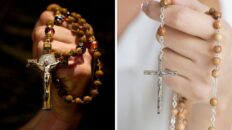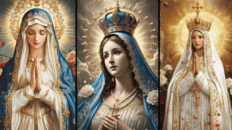

The Memorare is one of the most ancient and beloved prayers to the Virgin Mary in the Catholic Church. For centuries, Catholics have turned to this prayer in their most desperate moments — and they have not been disappointed. This powerful Marian prayer is especially prayed for impossible requests, because it invokes Mary’s intercession with the confidence that she has never abandoned anyone who sought her help.
The word “Memorare” is Latin for “Remember” — the opening word of this timeless prayer. When we pray the Memorare, we are reminding ourselves (and Mary) of her extraordinary compassion and her role as our heavenly mother.
The Memorare is a beautiful prayer to the Virgin Mary, often said in times of need. Here’s a version that emphasizes the belief in her intercession for seemingly impossible requests:
Memorare for Impossible Requests
Remember, O most gracious Virgin Mary,
that never was it known that anyone who fled to your protection,
implored your help, or sought your intercession, was left unaided.
Inspired by this confidence,
I come before you,
O Mother of the Word Incarnate, despite the apparent impossibility of my request.
[Here, state your specific request or intention]
To you I entrust my cause, knowing that you can secure for me what seems impossible in human eyes.
O Refuge of Sinners, Comforter of the Afflicted,
dispel the darkness of my doubts and fears.
Guide me in my journey of faith, and strengthen my trust.
Hear my plea,
O Virgin Most Powerful, and present it to your Divine Son with a mother’s loving and persuasive hand.
In your mercy, O Queen of Heaven, obtain for me the grace I seek and assist me in my trials and tribulations.
Amen.
Remember, the power of prayer lies not only in the words themselves but in the sincerity and faith with which they are said. Trust in the intercession of the Virgin Mary and believe that, through her, all things are possible.
The History of the Memorare
The Memorare has been prayed by Catholics for over five centuries. It is traditionally attributed to Saint Bernard of Clairvaux (1090–1153), one of the great medieval mystics and Doctors of the Church, though its precise origins remain a matter of historical discussion.
The prayer became widely known through Father Claude Bernard, a 17th-century French priest known as “the poor priest,” who distributed hundreds of thousands of copies of the Memorare to the sick and dying in Paris. He credited the prayer with countless miraculous interventions.
In more recent times, Venerable Patrick Peyton, the “Rosary Priest,” famously credited the Memorare with saving his life when he was dying of tuberculosis as a young man. His recovery he attributed entirely to Mary’s intercession through this prayer.
Why the Memorare is So Powerful
The Memorare’s power lies in its bold confidence in Mary’s intercession. Unlike prayers that approach Mary with hesitation, the Memorare begins with an audacious claim: “never was it known that anyone who fled to your protection… was left unaided.”
This is not presumption — it is faith. It is the faith of millions of Catholics who have experienced Mary’s motherly intercession throughout history. When we pray the Memorare, we are standing on the shoulders of all those who prayed it before us and were answered.
Mary’s power of intercession flows from her unique relationship with Jesus Christ, her Son. As the Mother of God, she stands closer to the throne of grace than any other creature. What a mother asks, a loving son considers with the deepest attention.
When to Pray the Memorare
The Memorare is appropriate in any situation of need, but it is particularly powerful:
• When facing an impossible situation that seems beyond human resolution
• During times of illness or medical crisis
• When seeking spiritual conversion for a loved one
• In moments of grief, loss, or despair
• When making an important decision and needing guidance
• As a daily prayer for protection and guidance
How to Pray the Memorare Effectively
Many saints recommend praying the Memorare three times in a row for urgent needs, or as a novena over nine consecutive days. You can also pray it alongside the Rosary, adding it at the end of each decade as a particular act of trust in Mary.
As you pray, speak your specific intention clearly when you reach the heart of the prayer. Mary hears each word, and each prayer offered with faith reaches the throne of God.
A Mother Who Never Abandons Her Children
The Memorare is ultimately a prayer of total trust. It is the prayer of someone who knows they cannot help themselves and who throws themselves entirely on Mary’s motherly care. If you are in that place right now — if your situation feels impossible, if you have run out of options — the Memorare is your prayer.
Pray it now. Pray it again tomorrow. Trust that Our Lady has heard you, and that her Son will answer in His perfect time and perfect way. She has never abandoned anyone who sought her help. She will not abandon you.
The Memorare is an ancient Catholic prayer to the Virgin Mary, beginning with the Latin word "Memorare" (meaning "Remember"). It expresses total confidence in Mary's intercession, stating that no one who sought her help has ever been left without aid. The prayer asks Mary — as our spiritual mother and advocate — to bring our petitions to her Son Jesus Christ, especially in desperate situations.
The Memorare is particularly appropriate when facing urgent or seemingly impossible situations — a medical crisis, a desperate financial need, a broken relationship, or any moment when human help has been exhausted. Saint Teresa of Calcutta prayed the Memorare whenever an emergency arose. Many Catholics also pray it three times in a row for urgent needs, a practice associated with many answered prayers throughout Church history.
The Memorare is traditionally attributed to Saint Bernard of Clairvaux (1090-1153), though scholars believe it derives from a longer 15th-century prayer. It was popularized in the 17th century by Father Claude Bernard, who distributed over 200,000 copies after attributing his own miraculous healing to this prayer. Saint Francis de Sales prayed it daily, and Saint Teresa of Calcutta kept it close at all times, crediting it with never failing her.
Throughout Church history, countless Catholics have attributed answered prayers to the Memorare. Notable examples include Father Claude Bernard's miraculous healing (17th century), Venerable Patrick Peyton's recovery from tuberculosis, and thousands of testimonies from Lourdes pilgrims. The prayer's claim — "never was it known that anyone who fled to thy protection was left unaided" — reflects the accumulated faith of centuries of answered prayers.