In the rugged, faith-hungry lands of 7th-century Europe, one humble English monk set out to change history — not with a sword or crown, but with Scripture, courage, and the burning fire of missionary zeal.
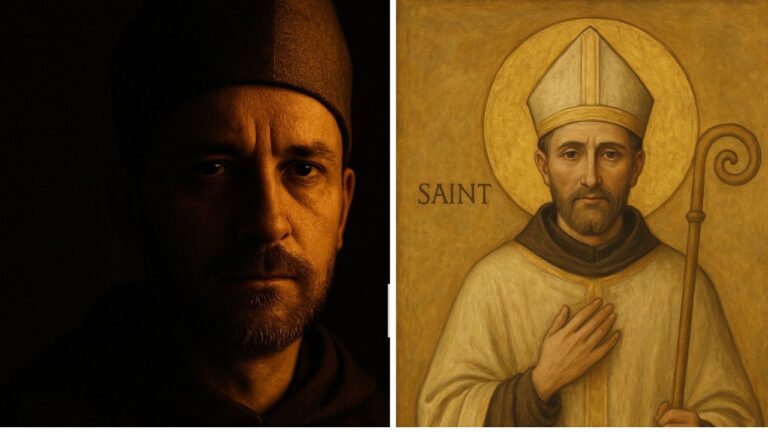
His name was Saint Willibrord, known today as the Apostle to the Frisians.
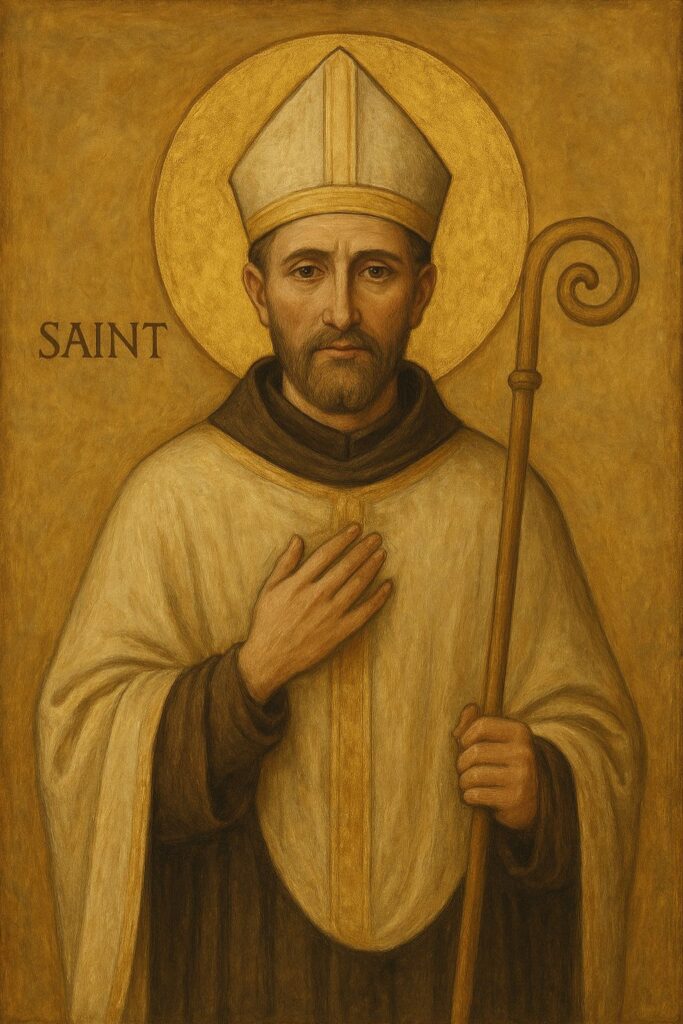
From England to Ireland — A Pilgrim’s Preparation
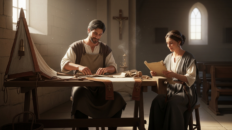
Willibrord was born around 658 A.D. in Northumbria, England — a time when the Gospel was still spreading across the British Isles. Drawn to God at a young age, he entered a monastery and was soon sent to Ireland, then a flourishing center of Christian learning.
Under the guidance of Saint Egbert, he absorbed not only the wisdom of the Scriptures but also the missionary spirit of the Irish monks — men who believed the world was their mission field.
Little did young Willibrord know, God was preparing him for something far greater.
A Mission to the Unknown
In 690 A.D., Willibrord felt the call of Christ to evangelize the Frisians, a fierce and pagan people living in what is now the Netherlands and parts of Belgium and Germany. It was a dangerous mission — filled with uncertainty, resistance, and even threats of death.
But armed with a few fellow monks, a small boat, and an unshakable faith, Willibrord set sail from Ireland to the shores of Frisia.
“The Apostle to the Frisians”
When Willibrord arrived, he found a land ruled by pagan chieftains and deeply rooted traditions. Yet, his gentleness and conviction won hearts. He preached with love, baptized thousands, and established churches wherever he went.
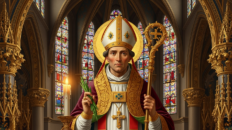
His missionary zeal caught the attention of the Pope himself. In 695, Pope Sergius I consecrated him Archbishop of the Frisians in Rome, giving him the name Clement and the authority to shepherd a new Christian land.
It was then that Willibrord’s great mission truly began.
Building the Church in the Low Countries
As bishop, Willibrord founded monasteries, schools, and churches throughout the region. His most famous foundation, the Monastery of Echternach in present-day Luxembourg, became a spiritual and educational center that outlasted the centuries.
He baptized countless converts, trained priests, and laid the foundation of what would become the Catholic Church in the Netherlands and northern Europe
A Legacy of Faith and Fortitude
Despite persecution, hardship, and the pagan resistance that surrounded him, Saint Willibrord never gave up. His heart burned with love for Christ and compassion for the souls entrusted to him.
He died peacefully on November 7, 739, at Echternach — a saint who had turned foreign lands into holy ground.
Today, his relics rest there, drawing pilgrims from across Europe who still venerate him as a true apostle of light in a darkened age.
Why We Remember Him
Saint Willibrord’s life is a reminder that evangelization is not just about words — it’s about love in action. He didn’t come with force or power but with humility, patience, and unwavering trust in God’s plan.
He reminds us that we, too, are called to be missionaries — perhaps not across seas, but in our homes, workplaces, and communities.
Saint Willibrord, pray for us
That we may be fearless in spreading God’s love, steadfast in faith,
and tireless in bringing light to the corners of our world.