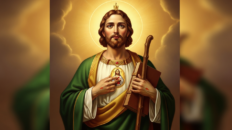
Today, the Church celebrates Saint Augustine of Hippo, one of the greatest theologians and Doctors of the Church. Once a wayward youth, his dramatic conversion through the prayers of his mother, Saint Monica, and the guidance of Saint Ambrose, reminds us that God’s grace can transform any heart.
Prayer of the Day
O Lord, my God,
Through the example and intercession of Saint Augustine, grant me the grace to thirst for Your truth and to never cease seeking You in all things. Turn my heart fully toward You, that I may rest in Your love and live faithfully as Your disciple.Through Christ our Lord. Amen
Mass Reading of the Day
First Reading: 1 Thessalonians 3:7-13
Paul rejoices in the steadfast faith of the Thessalonians and prays for their love to increase.
Responsorial Psalm: Psalm 90:3-5, 12-14, 17
“Fill us with your love, O Lord, and we will sing for joy.”
Gospel: Matthew 24:42-51
Jesus urges watchfulness, teaching that we must be ready for the coming
Saint of the Day: Saint Augustine of Hippo (354–430)
Who Was He?
Saint Augustine was born in Tagaste (modern-day Algeria). In his youth, he lived a worldly life, but through the constant prayers of his mother, Saint Monica, and the preaching of Saint Ambrose, he experienced a powerful conversion. He was baptized at the age of 32 and went on to become a priest, bishop, theologian, and one of the greatest Doctors of the Church.
His writings, especially The Confessions and The City of God, continue to shape Christian theology, spirituality, and philosophy even today.
5 Interesting Facts about Saint Augustine
- He is considered one of the most influential thinkers in Western Christianity and Western philosophy.
- His famous line, “Our hearts are restless until they rest in You, O Lord,” has inspired millions across centuries.
- He became the Bishop of Hippo (in North Africa) and served faithfully for 34 years.
- His conversion story is deeply tied to the relentless prayers and tears of his mother, Saint Monica, who is also a saint.
- His theological works laid the foundation for doctrines on grace, free will, and the Trinity.