Welcome to today’s mass reading for July 6, a Monday in Ordinary Time that the Church gives us as a gentle but piercing invitation. Three voices speak today: a prophet who carries God’s wounded love for his people, a psalm that breathes repentance and hope, and Jesus himself offering the most astonishing thing imaginable to anyone who is tired. If you came here this morning carrying something heavy, these readings were chosen for you.
Mass Reading July 6: Where We Are in the Liturgical Year
July 6 falls in Ordinary Time, the long green season that stretches across summer and into autumn. The Church’s liturgical colour is green, symbolising growth, life, and the steady maturing of our faith. There are no great feasts today in the universal calendar, though the Church commemorates Saint Maria Goretti, the young martyr of mercy and purity, whose witness of forgiving her attacker echoes powerfully through the themes of today’s readings.
Ordinary Time is not ordinary in the sense of being boring. It is the season where discipleship becomes daily and concrete. The readings in this season move through the prophets and the Gospels in a way that slowly forms us. Week by week, we are shaped into people who look more like Christ. Today’s readings fit beautifully into that pattern: they call us to choose mercy over religious performance, to be honest before God about our failures, and to trust that his burden really is lighter than the one we carry alone.
First Reading: Hosea 2:16, 17b-18, 21-22 — God Courts His People Again
The prophet Hosea writes in one of the most tender and heartbreaking passages in all of scripture. God speaks not as a judge, but as a spouse who has been betrayed and who still, impossibly, loves. Hosea 2:16-22 captures the Lord saying: “I will allure her, and bring her into the wilderness, and speak tenderly to her… And I will betroth you to me forever; I will betroth you to me in righteousness and in justice, in steadfast love, and in mercy.”
This is extraordinary language. God is not saying “shape up or I will punish you.” He is saying “I will take you somewhere quiet, and I will speak to your heart.” The wilderness in the Bible is not just a place of hardship. It is a place of encounter. It is where Moses met God in the burning bush, where Elijah heard the still small voice, where Jesus was tested and emerged ready to preach. When God brings us into the wilderness, he is not abandoning us. He is clearing away the noise so we can finally hear him.
The connection to our lives is immediate. How often do we find that it is in the harder seasons, a job lost, an illness, a relationship broken, that we finally stop and listen? The Church presents this reading not to frighten us but to console us. Your difficult moment may be God alluring you to a deeper intimacy. He is not finished with you. He wants to betroth you to himself in steadfast love and mercy. That word “betroth” implies permanence, covenant, and commitment. God is not a fair-weather friend.
Responsorial Psalm: Psalm 51 — Have Mercy on Me, O God
Psalm 51 is King David’s great cry of repentance after his terrible sin with Bathsheba. The response we sing today captures the psalm’s emotional core: “I will rise and go to my father.” That refrain points us straight toward the Prodigal Son, and it pulses with the kind of humble courage that God always rewards.
The psalm teaches us that true prayer begins with honesty. David does not make excuses. He says simply: “Have mercy on me, O God, according to your steadfast love.” He does not appeal to his own record. He appeals to who God is. That is the posture of a soul that has learned something essential about prayer. When we come to God today, we come not as people who have earned a hearing, but as people who know he is merciful. That knowledge is enough.

Gospel: Matthew 9:18-26 — Come to Me, All Who Labour
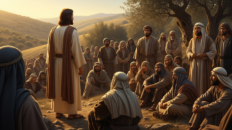
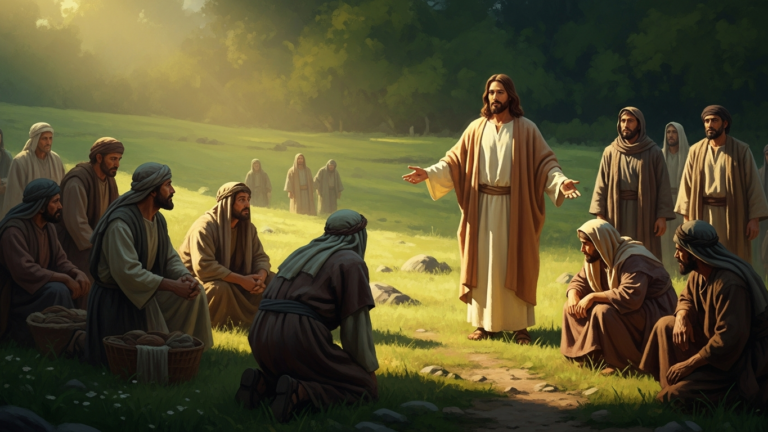
Today’s Gospel comes from Matthew 11:28-30, and it contains some of the most beloved words Jesus ever spoke. He says: “Come to me, all who labour and are heavy laden, and I will give you rest. Take my yoke upon you, and learn from me, for I am gentle and lowly in heart, and you will find rest for your souls. For my yoke is easy, and my burden is light.”
Let’s sit with this for a moment, because it is easy to read past it too quickly. Jesus is speaking to a first-century audience that knew exactly what a yoke was. A yoke bound two animals together so they could share the weight of a load. The rabbis of Jesus’s day spoke of “taking on the yoke of the Torah,” meaning accepting the obligations of God’s law. It was considered an honour, but also a weight. Jesus is not dismissing the Torah. He is saying that when you walk with him, the weight is different. He is already bearing it. You are yoked to him.
Notice also what Jesus says about himself: “I am gentle and lowly in heart.” This is one of the only places in the Gospels where Jesus describes his own inner character. He does not say “I am powerful” or “I am holy” or “I am divine,” though all of those things are true. He says he is gentle. He is humble. He meets us where we are. The Catechism (CCC 1717) reminds us that the Beatitudes illuminate the way of discipleship, and the gentleness Jesus describes here is itself a beatitude: “Blessed are the meek.” Jesus is not just preaching this. He is living it.
The word “rest” in Greek is anapausis, which means not just the absence of work, but a deep refreshment, a restoration of the whole person. This is what Jesus promises. Not a life without difficulty, but a life in which the difficulty does not crush you because you are not carrying it alone. Saint Augustine understood this deeply. His famous line from the Confessions captures it: “Our heart is restless until it rests in You.” The rest Jesus offers is not laziness. It is the fruit of a soul aligned with God.
How does this land for you today? Perhaps you are tired of performing, of maintaining an image, of trying to be good enough. Jesus speaks directly to that. He is not asking you to earn his help. He is asking you to come. The action required is not an achievement. It is a surrender. It is the willingness to say, “I cannot carry this alone,” and then to actually let him carry it with you. That is the spiritual movement Matthew wants us to make this morning.
A Prayer for Today’s Mass Reading
Lord Jesus, you know what I am carrying today. You see the weariness I try to hide from everyone else. I hear you calling me to come, and I want to respond with my whole heart. Help me to stop straining under burdens I was never meant to carry alone. Like the psalmist David, I have no claim on your mercy except your own love, and that is more than enough. Gentle Jesus, take what is heavy from my hands. Let me learn from your humility and find the rest you promise. Make me gentle too, so that I carry others lightly, the way you carry me. I trust you today. Amen.
Living Today’s Gospel: Practical Application
The readings today are not just beautiful words. They are an invitation to live differently this week. Here are three concrete ways to respond.
First, identify one thing you are straining under. It might be anxiety about a relationship, guilt over a past failure, or the exhaustion of trying to control outcomes you cannot control. Name it honestly in prayer today. Use the posture of Psalm 51: appeal not to your own goodness but to God’s mercy. Tell him you are tired. He already knows, but saying it out loud matters.
Second, practice the gentleness Jesus claims as his own. He says he is gentle and lowly in heart. Find one person in your day today who needs to be met with patience rather than frustration. A child, a colleague, a stranger. Offer them the gentleness that you yourself have received from Christ. As the saints knew well, holiness is almost always practised in the small and ordinary moments.
Third, spend five minutes in quiet today. No phone, no noise. Let God allure you into your own small wilderness. The reading from Hosea promises that this is where he speaks tenderly. You might be surprised what you hear when you stop filling the silence.
Related Catholic Resources
Deepen your faith with these guides on Practical Faiths:
Frequently Asked Questions
What are today’s Catholic Mass readings for July 6?
The mass reading for July 6 includes a First Reading from the prophet Hosea (Hosea 2:16, 17b-18, 21-22), the Responsorial Psalm from Psalm 51 with its response of mercy and return, and the Gospel from Matthew 11:28-30, in which Jesus invites all who are burdened to come to him and find rest.
What is the theme of today’s Mass reading on July 6?
The unifying theme is merciful rest. Hosea shows God tenderly calling his people back into relationship. Psalm 51 models honest, humble prayer. And Jesus offers rest to the weary, promising that walking with him is lighter than walking alone. Together, they invite us to stop performing and simply come to God as we are.
How do I follow along with the daily Mass readings?
The easiest way is to visit the United States Conference of Catholic Bishops (USCCB) website at usccb.org, which publishes the full daily Mass readings each day. You can also use apps like Laudate or iBreviary, or pick up a daily missal from your local Catholic bookshop. Returning to a site like Practical Faiths each morning for reflection can also help you engage the readings more deeply before Mass.
What is the liturgical colour for July 6?
The liturgical colour for July 6 is green, the colour of Ordinary Time. Green symbolises growth, hope, and the ongoing work of the Holy Spirit in forming disciples. If your parish is celebrating a feast of a martyr, red may be used instead. On this date, some communities honour Saint Maria Goretti, whose colour would be red as a virgin martyr.