
When you have tried everything and nothing has worked, when the situation looks impossible and you don’t even know where to begin, a prayer to St Jude might be exactly where God is calling you. For centuries, Catholics in their darkest moments have turned to St Jude Thaddaeus, and the stories of answered prayers are extraordinary. He is not a saint of comfortable requests. He is the saint of the desperate, the forgotten, and the nearly hopeless. And that is precisely what makes him so beloved.
Who Is St Jude and Why We Turn to Him with Prayer
St Jude Thaddaeus was one of the twelve apostles chosen personally by Jesus Christ. He is mentioned in the Gospels of Luke 6:16 and Acts 1:13, and he is the author of the short but powerful Epistle of Jude in the New Testament. He is not to be confused with Judas Iscariot, the traitor. That confusion, church historians suggest, is actually one reason St Jude became associated with hopeless causes. Early Christians were reluctant to invoke him, fearing they might be praying to the wrong Jude. As a result, only the truly desperate dared call on him. And when they did, he answered.
Tradition holds that St Jude preached the Gospel in Judea, Samaria, and Persia alongside St Simon, and that both were martyred there. The Catholic Church celebrates his feast day on October 28, which he shares with St Simon. His relics are venerated at St Peter’s Basilica in Rome, a sign of the deep honour the Church has always accorded him.
The Catechism of the Catholic Church teaches that the saints in heaven intercede for those still on earth: “The witnesses who have preceded us into the kingdom… intercede for us” (CCC 2683). When we pray to St Jude, we are not worshipping him. We are asking a friend who is close to God to bring our needs before the Lord on our behalf. It is the same logic as asking a holy friend to pray for you, except St Jude is already in the presence of God.
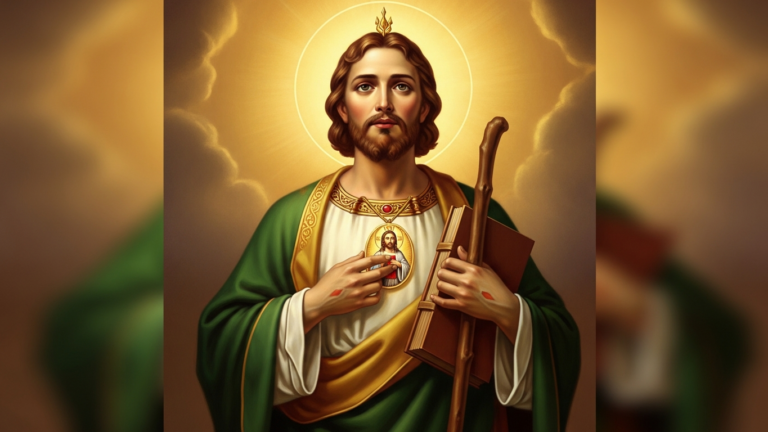
St Jude is typically depicted holding an image of Christ, called the Image of Edessa or the Mandylion, a cloth bearing the face of Jesus. This image connects him to a famous tradition in which King Abgar of Edessa was healed by this miraculous image, and Jude was said to have brought it to him. He carries Christ with him, quite literally. That is who you are calling on when you pray to this apostle.
The Scripture Foundation for Asking St Jude to Intercede
Some Catholics wonder whether asking a saint to pray for them has any real basis in scripture. It does, and it is deeply grounded. St Paul writes in 1 Timothy 2:1, “First of all, then, I urge that supplications, prayers, intercessions, and thanksgivings be made for all men.” This is the logic of the whole Church, living and departed, praying together as one Body of Christ.
St Jude himself, in his own epistle, wrote: “But you, beloved, build yourselves up on your most holy faith; pray in the Holy Spirit; keep yourselves in the love of God” (Jude 1:20-21). He understood prayer not as a last resort but as a way of abiding in God’s love. That is the spirit in which he invites us to pray to him now.
The Church also points to the Book of Revelation, where the elders in heaven offer up the prayers of the saints before the throne of God (Revelation 5:8). The saints are not silent. They are actively presenting our prayers to God. That is exactly what St Jude does for us.
How to Pray to St Jude in Your Everyday Catholic Life
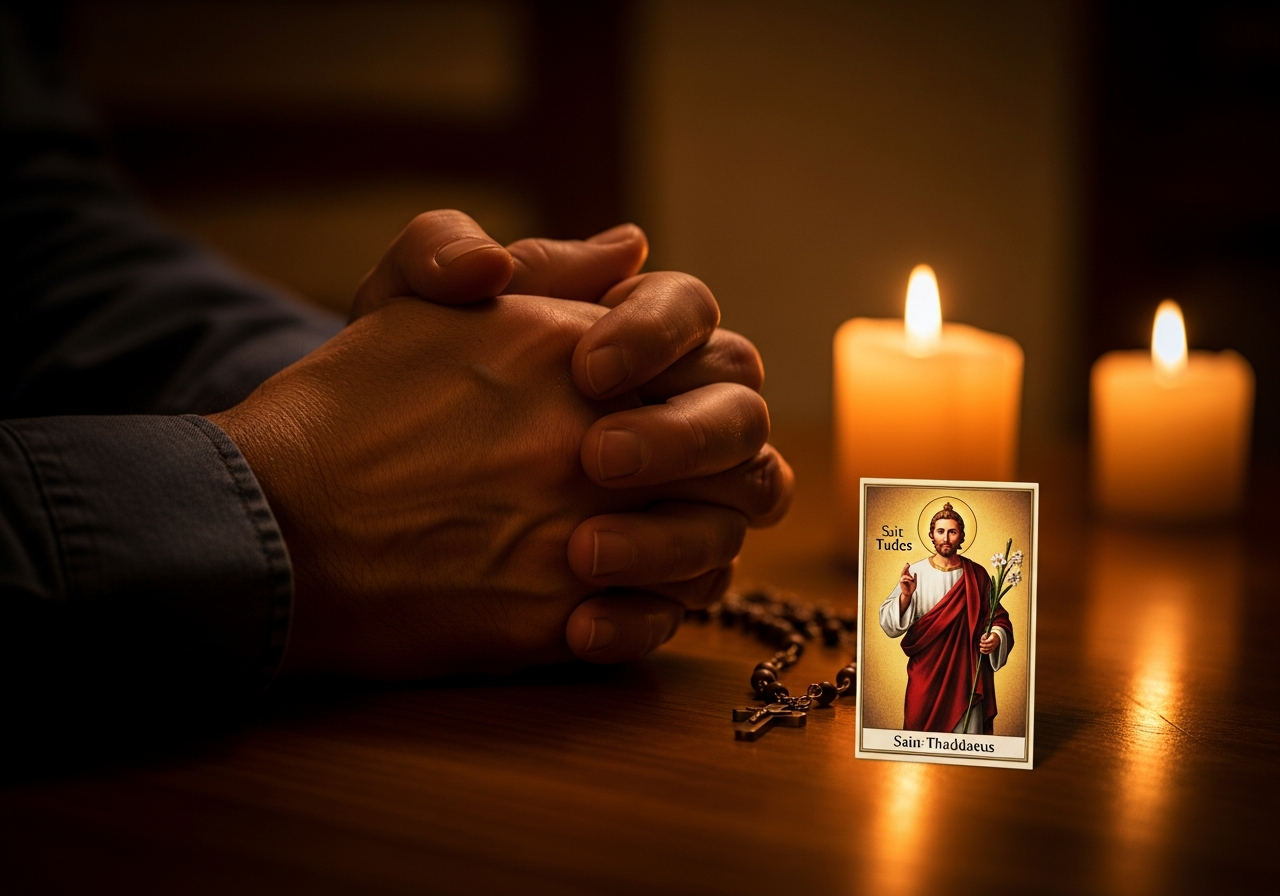
You do not need a formal novena or a printed prayer card to begin. You can speak to St Jude as you would a trusted friend. Tell him what is happening. Be specific and honest. The saints are not put off by raw emotion or desperate circumstances. They were human once. They know what suffering feels like.
That said, the Church’s tradition of novenas, nine days of sustained prayer, is a powerful way to pray to St Jude. A novena creates a rhythm of returning to God day after day, which shapes us spiritually even as we wait for an answer. St Josemaria Escriva taught that perseverance in prayer is itself a form of trust in God, a declaration that we believe He hears us.
Many Catholics also light a candle when they pray to St Jude. This is not superstition. It is a sacramental act. The Catechism explains that sacramentals “prepare us to receive grace and dispose us to cooperate with it” (CCC 1670). The candle is a small act of faith, a physical sign that our prayer continues even when we have returned to the demands of daily life.
You might also wear a St Jude medal or keep his image in your home. These are not lucky charms. They are reminders. Every time you see them, you remember that you are not facing your crisis alone. A great cloud of witnesses, as the Letter to the Hebrews says, surrounds you.
A Traditional Prayer to St Jude
O most holy Apostle, Saint Jude Thaddaeus, faithful servant and friend of Jesus, the Church honours and invokes you universally as the patron of hopeless cases, of things almost despaired of. Pray for me, I am so helpless and alone. Make use, I implore you, of that particular privilege given to you to bring visible and speedy help where help is almost despaired of. Come to my assistance in this great need, that I may receive the consolation and help of heaven in all my necessities, tribulations, and sufferings, particularly this request: [mention your intention here]. And that I may praise God with you and all the elect throughout eternity. I promise, O blessed Saint Jude, to be ever mindful of this great favour, and to always honour you as my special and powerful patron, and to gratefully encourage devotion to you. Amen.
Related Catholic Resources
Deepen your faith with these guides on Practical Faiths:
→ Catholic Prayers
→ Catholic Saints
→ How to Pray the Rosary
Frequently Asked Questions
Is it a sin to pray to St Jude?
Not at all. Praying to St Jude is a completely orthodox Catholic practice. The Catechism of the Catholic Church (CCC 2683) affirms that the saints intercede for us in heaven. When Catholics pray to the saints, they are asking for intercession, not worship. Worship belongs to God alone, and asking a saint to pray for you is no different from asking a holy person on earth to do the same.
Why is St Jude the patron of hopeless causes?
Church historians believe early Christians were reluctant to invoke St Jude because his name was so close to Judas Iscariot, the betrayer. Over time, only those who felt completely desperate would call on him. When their prayers were answered repeatedly, his reputation as the saint of impossible situations grew. His power is real, and his willingness to help those in desperate need is well attested through centuries of Catholic devotion.
How long should I pray the St Jude novena?
A traditional novena is nine consecutive days of prayer. The number nine recalls the nine days the apostles and Mary spent in prayer between the Ascension and Pentecost (Acts 1:14). Some Catholics pray the St Jude novena three times in succession, as a traditional practice of perseverance and deep trust. What matters most is sincerity, consistency, and genuine surrender to God’s will in the outcome.
Do I have to publish a notice in the newspaper after my prayer is answered?
There is no theological obligation to do so. However, the tradition of publishing a thanksgiving notice in newspapers or online stems from a heartfelt desire to spread devotion to St Jude and give witness to God’s mercy. It is an act of gratitude and evangelisation, not a binding requirement. If you feel moved to share your testimony, it can be a beautiful encouragement to others who are still waiting for their own miracle.